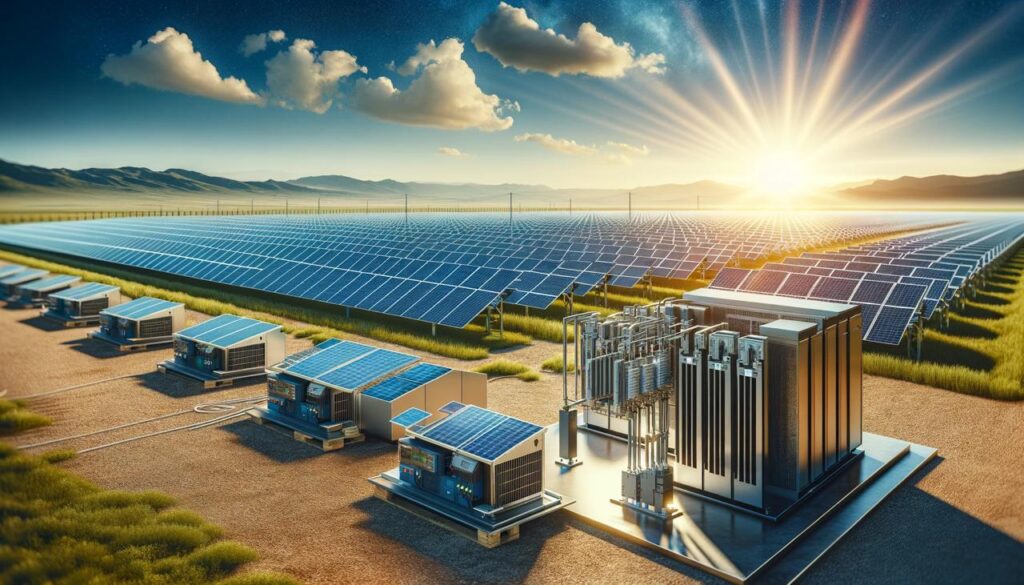
1. Sunlight: Solar energy is harnessed from sunlight, which is abundant and freely available. Photons, which are particles of light, are emitted by the sun and travel through space to reach the Earth.
2. Solar Panels: Solar panels, also known as photovoltaic (PV) panels, are made up of semiconductor materials such as silicon. When sunlight hits the solar panels, it excites the electrons in the semiconductor material, creating an electric current.
3. Direct Current (DC) Electricity: The electric current generated by the solar panels is in the form of direct current (DC) electricity. This type of electricity flows in one direction and is used in batteries and electronic devices.
4. Inverter Conversion: Most of the appliances and electrical systems in homes and businesses use alternating current (AC) electricity. Therefore, an inverter is used to convert the DC electricity produced by the solar panels into AC electricity that can be used to power household appliances and feed into the electrical grid.
5. Utilization: The AC electricity produced by the solar panels can be used to power lights, appliances, electronics, and other electrical devices in homes, businesses, and industries. Any excess electricity generated can be fed back into the grid for credit or stored in batteries for later use.
6. Net Metering: In many locations, there is a system called net metering that allows solar energy system owners to receive credit for the excess electricity they generate and feed back into the grid. This credit can offset the electricity they consume from the grid when their solar panels are not producing enough electricity, such as during the night.
7. Environmental Benefits: Solar energy is a clean and renewable source of energy that produces no greenhouse gas emissions or air pollution during operation. By harnessing solar energy, we can reduce our dependence on fossil fuels and mitigate the impacts of climate change.
8. Maintenance: Solar energy systems generally require minimal maintenance, with occasional cleaning of the solar panels to remove dust and debris and ensuring that the system is functioning properly. With proper maintenance, solar panels can last for decades, providing a reliable and sustainable source of electricity.